What do the future of work and communication have to do with each other?
Remote work, return to the office or a hybrid model of work? Ask your employees!
—
3 min to read
Written by:
Marina Čulić Fischer
When it comes to the type of work after a pandemic, various companies approach this question in different ways. While some of them decided to allow their employees to work from home permanently (Twitter, Meta, SAP, etc.), others began to return them to offices, while others combine both approaches, implementing hybrid operation model.
Apple vs Tesla
Technology giant Apple seems to have decided to implement the third model. Its director, Tim Cook, recently said: ” We’re running the mother of all experiments because we don’t know. We’re running a pilot and trying to find a place that makes the best of both of these worlds.”
Apple decided this spring that its employees must return to the offices for at least three days a week, which caused a wave of dissatisfaction. That is why Apple’s Board decided to test the best model, which means returning to the office two days a week, with the possibility of working from home for those who want to continue working from home.
On the other hand, Elon Musk, the leader of Tesla, made a rather undemocratic decision in early June that all his employees must return to their jobs, under the threat of losing their jobs.
Research by the Pew Research Center in February found that a high 61% of Americans who worked from home during the pandemic wanted to continue to do so after the pandemic.
Agency solution from Zagreb
In Dialog, we value democracy and communication, so in April we conducted a survey among our employees, questioning their wishes regarding returning to work. The results showed that all our employees want to work from home occasionally, but also that they think it is necessary for the whole team to be in the office a certain number of days a week. Most employees voted for three days in the office and two from home. They mentioned saving time and resources, more freedom in organizing their daily tasks and greater creativity as the biggest advantages of working from home. The biggest drawback was the lack of direct communication with colleagues.
During May, we worked using the hybrid model voted for by most employees, and in June we conducted a new survey asking them what they thought of the implemented model. All of them stated that the implemented model is convenient for them, regarding saving time and resources and better creativity. They also mentioned better productivity, less stress, and a better quality of life. Also, most employees are in favor of introducing a “workation” model during the summer, which we plan to implement in July. Our conclusion is that the future of work is related to the maximum adaptation to the wishes of employees and that the key role lies in agile internal communication, which we will continue to encourage.
Subscribe to our Newsletter!
And be always updated with news from Dialog.
Highlights
Influencer Vetting: Why the Right Influencer Matters More Than Follower Count
A successful influencer marketing campaign starts long before the first social media post goes live. It starts with choosing the right creator - someone whose audience, values and communication style align with the brand.
With more than 5 million paid subscriptions, Substack brings writers together around highly specific interests and topics, creating small but highly focused communities that may be worth getting to know.
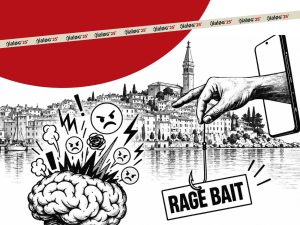
Rage Bait: Key Takeaways from the Weekend Media Festival
The panel “Rage Bait – Anger as a Shortcut to the Algorithm” explored content designed to provoke strong reactions, the line between legitimate provocation and manipulation, and the responsibility of media outlets, communicators and brands.
We use cookies to advance user experience on our website. Please select cookies you wish to allow us to set on your computer. For more information please see our “Cookies policy” and “Privacy protection”.
Neccessary
Necessary cookies help make our website usable by enabling basic functions like page navigation and access to secure areas of the website. The website cannot function properly without these cookies. These cookies do not store any personally identifiable information.
Performance
Performance cookies help us to understand how you interact with this website by collecting and reporting information anonymously. These cookies allow us to count visits and traffic sources, so we can measure and improve the performance of our site. These cookies do not store any personally identifiable information.