Bluewashing – when words speak louder than actions
In the era of the renaissance of the social influence of companies, we are no longer talking only about environmental protection and responsibility towards the planet, but also about people. How to distinguish sincere intentions from beautiful stories?
—
3 min to read
Written by:
Nataša Blagojević
While you have probably come across the term greenwashing while reading news from portals or content on social networks, there are still not so many words about bluewashing. Although a parallel can be drawn between them and they have certain similarities, primarily in misleading consumers, the key difference is that greenwashing refers to environmental protection and bluewashing to social responsibility.
What exactly is it about?
The term bluewashing is used to describe false marketing that overstates a company’s commitment to responsible social practices. In order to make their brands, products and services more attractive to consumers, companies through communication activities create the impression that they deeply care about social problems and actively want to contribute to their solution, often not only exaggerating, but also deliberately highlighting only positive examples, without any real contribution.
The term itself first appeared in the context of the United Nations Global Compact (UNGC), a non-binding agreement to encourage companies around the world to adopt socially responsible practices. The agreement promotes ten principles for human rights, labor standards, environmental protection and the fight against corruption. Although signatory companies submit reports on their activities, the possibilities of verifying the veracity of the information they share are limited. As a result, it is fair to ask whether some of them are misusing their membership for promotional purposes, and the UNGC blue logo is a nice addition to the “About Us” section of their corporate website.
How to recognize bluewashing?
Bluewashing companies approach social issues superficially, use only general expressions and focus exclusively on some aspects of the problem and do not communicate concrete information about the results of their activities. They lack transparency, and sometimes their entire business model is contradictory to the social engagement they promote. The use of symbols and the dominant reliance on visual communication without a firm foothold, a much greater focus on promotional messages rather than the real difference resulting from social engagement can also be a clear signal that it is bluewashing.
Perhaps there are most examples of companies whose social responsibility and ethics are questionable among the globally known fashion giants who are not only among the leading polluters of the environment, but also often called out for inhumane working conditions in factories, low wages, even exploiting children for labour. Recently, large digital platforms, such as social networks and e-commerce platforms, have also been targeted due to claims about privacy and security and the manipulative use of users’ personal data.
How to avoid the bluewashing trap?
In order not to give your communication team, and then also other stakeholders such as shareholders, suppliers, employees and consumers, a headache, the key is in a strategic approach, right choice of social issues that are relevant in terms of company values, thinking about how they can be approached and what actions is possible to implement. The strategic approach implies that here we are not talking about trends, but purposeful work with a focus on long-term engagement and results that are not achieved overnight, as well as transparency and credible communication all the time. Step boldly into the changes and, as one of the favourite phrases in the business world says, “walk the talk”. Consumers will recognize the effort and reward you with trust.
Subscribe to our Newsletter!
And be always updated with news from Dialog.
Highlights
Influencer Vetting: Why the Right Influencer Matters More Than Follower Count
A successful influencer marketing campaign starts long before the first social media post goes live. It starts with choosing the right creator - someone whose audience, values and communication style align with the brand.
With more than 5 million paid subscriptions, Substack brings writers together around highly specific interests and topics, creating small but highly focused communities that may be worth getting to know.
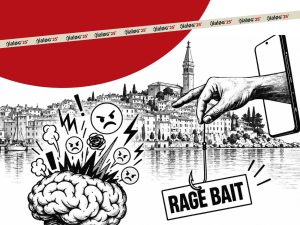
Rage Bait: Key Takeaways from the Weekend Media Festival
The panel “Rage Bait – Anger as a Shortcut to the Algorithm” explored content designed to provoke strong reactions, the line between legitimate provocation and manipulation, and the responsibility of media outlets, communicators and brands.
We use cookies to advance user experience on our website. Please select cookies you wish to allow us to set on your computer. For more information please see our “Cookies policy” and “Privacy protection”.
Neccessary
Necessary cookies help make our website usable by enabling basic functions like page navigation and access to secure areas of the website. The website cannot function properly without these cookies. These cookies do not store any personally identifiable information.
Performance
Performance cookies help us to understand how you interact with this website by collecting and reporting information anonymously. These cookies allow us to count visits and traffic sources, so we can measure and improve the performance of our site. These cookies do not store any personally identifiable information.