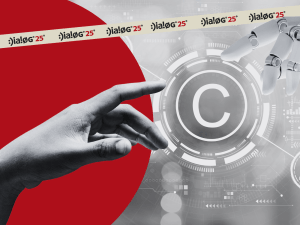
Who owns content on social media?
Social media and artificial intelligence have democratized creativity, but they have also brought the issue of copyright back into focus.


Stress and burnout have become part of the modern workplace routine—making mental health more than just a buzzword. It’s a necessity.
Long gone are the days when mental health at work was a side topic. Today, it’s a central part of the conversation. Prolonged exposure to stress and a poor work-life balance can lead to burnout, reduced productivity, and ultimately—disengaged employees. To better understand how people feel about mental health in the workplace, we ran a short survey across social media.
Every single respondent (100%) agreed that their work environment directly affects their mental health. Even more striking: 82% frequently feel job-related stress. When asked about their work-life balance, the responses were split—30% said they were satisfied, 30% dissatisfied, and the remaining 40% were somewhere in between.
But the most worrying finding? Burnout. A whopping 44% of Instagram respondents—and a staggering 88% on LinkedIn—said they’ve experienced work-related exhaustion. That’s not a fringe issue. That’s reality.
While conversations around mental wellbeing are more common, the gap between talk and action remains wide. A massive 89% of survey participants believe that employers in Croatia don’t do enough to support employee mental health. Even worse, 56% say this topic isn’t even openly discussed at their workplace.
When it comes to actual initiatives, the numbers drop even further. Just 20% of Instagram users and 17% of LinkedIn users reported having access to any mental health support programs at their company. And yet, demand is clear—81% said they would gladly use a “mental health day” if it were available.
Supporting employee wellbeing doesn’t just benefit individuals—it transforms workplace culture. 77% of respondents believe that mental health programs improve trust and openness within teams. Among the most valued initiatives? Flexible work arrangements (mentioned by 55% on Instagram and 69% on LinkedIn) and access to psychological support.
Interestingly, despite the overwhelming desire for mental health days, none of the respondents listed them as a top internal initiative—perhaps a sign that they’re still seen as wishful thinking rather than a real option.
The impact on employer image is just as clear. 82% believe that a company’s commitment to mental health significantly influences its reputation. But when asked whether they’d recommend their workplace based on its mental health initiatives, only 25% said yes. Even more telling—50% said no. That’s a red flag that current efforts (if any) simply aren’t enough.
The results of this survey paint a troubling picture of employee mental wellbeing—and an urgent need for change. Awareness is there, but theory needs to become practice. That means introducing real programs, encouraging flexibility, and fostering open dialogue.
At the end of the day, satisfied employees aren’t just more productive—they’re more loyal. And that benefits everyone.

And be always updated with news from Dialog.
Social media and artificial intelligence have democratized creativity, but they have also brought the issue of copyright back into focus.
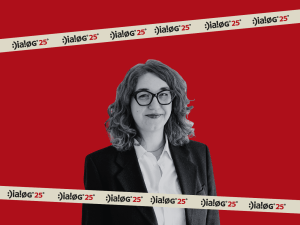
Dialog communications team welcomes Ines Madunić, Senior PR Executive.
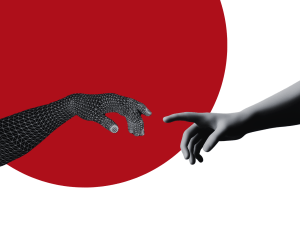
Regardless of the quality of AI content, credibility remains the biggest challenge.