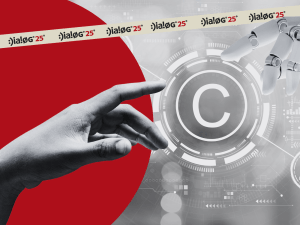
Who owns content on social media?
Social media and artificial intelligence have democratized creativity, but they have also brought the issue of copyright back into focus.


Communication that ignores generational differences leads to a loss of trust and attention.
The generational communication gap is no longer an abstract concept; it is a very real challenge that shapes understanding, trust, and relationships between people, teams, and brands. Messages that once worked universally are now increasingly met with confusion, resistance, or no response at all. Not because they are wrong, but because they no longer resonate in the same way with everyone.
In this article we explain why the generational communication gap is not about who is right, but about how well we understand one another.
The way we communicate is shaped by the time in which we grew up. Older generations built their professional identities within hierarchical systems, where clarity, formality, and authority were the cornerstones of effectiveness. Communication was slower, but structured, with a strong emphasis on process and stability.
Younger generations, by contrast, grew up in a digital, fast-paced, and highly open environment. For them, communication is two-way, immediate, and often informal. Authenticity, directness, and having a voice matter more than form. A message is not inherently less serious because it is brief, sent via an informal channel, or accompanied by an emoji.
The generational gap rarely lies in the content of the message itself, but in how its intent is interpreted. What one group perceives as unprofessionalism; another sees as honesty. What some view as a clear structure, others experience as rigidity and a lack of openness to dialogue.
In the workplace, for example, younger employees often expect regular feedback, involvement in decision-making, and a clear sense of purpose behind assigned tasks. Older generations may interpret this as impatience or a lack of respect for authority. In reality, the difference lies in expectations—not in work ethic or competence.
For younger generations, business communication is closely tied to purpose, flexibility, mental well-being, and the feeling of being heard. Communication that ignores these values quickly loses credibility. It is no longer enough to focus on what is being communicated; how and why matter just as much. Brands, leaders, and organizations that fail to grasp this risk sound distant, insincere, or outdated.
The generational communication gap is often exaggerated, but it ultimately conceals a simple truth: everyone wants the same thing—to be understood, respected, and included. The only real difference lies in the language we use to get there.

And be always updated with news from Dialog.
Social media and artificial intelligence have democratized creativity, but they have also brought the issue of copyright back into focus.

Dialog communications team welcomes Ines Madunić, Senior PR Executive.

Regardless of the quality of AI content, credibility remains the biggest challenge.