Social media and artificial intelligence have democratized creativity, but they have also brought the issue of copyright back into focus.
—
2 min to read
Written by:
Ema Aralica Šikonja
In the past, copyright was reserved for publishing houses and film studios. Today, battles are fought over a 15-second TikTok choreography or a visual generated by AI. It has never been easier to record a video, design a visual, or write a piece of text that reaches millions. At the same time, it has never been easier to “borrow” someone else’s work, idea, or identity.
Between regulation and practice
Legally speaking, things are quite clear. Copyright belongs to the person who created the work and gives them the exclusive right to decide how it will be used, reproduced, and adapted. However, practice on social media follows its own rules.
On platforms like Instagram and TikTok, content lives through sharing. Features such as Repost, Duet, or Stitch are designed to encourage duplication. At the same time, algorithms often don’t reward originality, but rather engagement.
We remember the case of Jalaiah Harmon, a young dancer who created the globally popular “Renegade” dance. While top TikTok stars like Charli D’Amelio were gaining millions of views and sponsorship deals performing her choreography, Jalaiah remained completely unknown for months.
AI enters the game – but who gets the credit?
With the rise of artificial intelligence, the line between inspiration and theft has become even more blurred. AI tools generate text, images, and video content in seconds, but based on human works on which these models were trained.
According to current interpretations within the EU, copyright can belong only to a natural person. This means that content generated entirely by AI does not have traditional copyright protection.
However, even when there is no “visible” author, traces of someone else’s creativity are often still present. The law protects a specific work, but not the idea itself, and in the digital age, ideas have effectively become a “public good.”
So who is the owner?
Technically, the owner is the author. In practice, the owner is the one who first monetizes the algorithm’s attention. But in the long run, the owner is the one who builds an unbreakable relationship with their audience.
The new definition of ownership is no longer in the work itself, but in the authentic perspective that no algorithm, not even AI, can fully replicate.
Subscribe to our Newsletter!
And be always updated with news from Dialog.
Highlights
Influencer Vetting: Why the Right Influencer Matters More Than Follower Count
A successful influencer marketing campaign starts long before the first social media post goes live. It starts with choosing the right creator - someone whose audience, values and communication style align with the brand.
With more than 5 million paid subscriptions, Substack brings writers together around highly specific interests and topics, creating small but highly focused communities that may be worth getting to know.
Rage Bait: Key Takeaways from the Weekend Media Festival
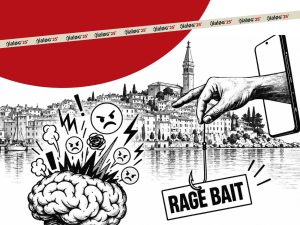
The panel “Rage Bait – Anger as a Shortcut to the Algorithm” explored content designed to provoke strong reactions, the line between legitimate provocation and manipulation, and the responsibility of media outlets, communicators and brands.
We use cookies to advance user experience on our website. Please select cookies you wish to allow us to set on your computer. For more information please see our “Cookies policy” and “Privacy protection”.
Neccessary
Necessary cookies help make our website usable by enabling basic functions like page navigation and access to secure areas of the website. The website cannot function properly without these cookies. These cookies do not store any personally identifiable information.
Performance
Performance cookies help us to understand how you interact with this website by collecting and reporting information anonymously. These cookies allow us to count visits and traffic sources, so we can measure and improve the performance of our site. These cookies do not store any personally identifiable information.