Why music has become one of brand building’s most powerful assets
Brands today are increasingly looking for ways to become part of culture rather than simply interrupt it. One of the most effective ways to achieve that is through music.
—
3 min to read
Written by:
Ines Madunić
If someone woke you up at three in the morning and asked you to recall the first commercial that comes to mind, chances are you wouldn’t remember the visuals or the tagline – you’d start singing.
Research has consistently shown that people process and retain information more effectively when it is paired with music. More importantly, music evokes emotion, creates powerful associations, and leaves memories that often outlast the advertising message itself. That’s why some campaigns stay with us for years, even decades, long after we’ve forgotten what the commercial looked like.
Yet despite its impact, sound branding still receives far less attention than visual identity, tone of voice, or social media strategy. And that’s surprising, considering audio is often the first brand cue to trigger an emotional response. A familiar melody or a distinctive jingle can instantly transport us back to a particular moment, remind us of a product, or spark an emotional connection that even the most compelling copy struggles to achieve.
Music is more than a marketing channel
One of the biggest misconceptions is treating music as just another communication channel. Music is culture. It is also one of the strongest expressions of personal identity – particularly among younger generations. Brands that manage to become part of culture tend to remain relevant far longer than those that exist only within paid media.
This shift is becoming increasingly visible in the way brands approach communications. Rather than trying to dominate the conversation, many are looking for ways to join conversations their audiences are already having. The challenge is no longer simply being seen – it’s being present in moments that genuinely matter while remaining authentic.
Music naturally lends itself to this role. It brings communities together, shapes identities, and creates emotional experiences that continue long after a campaign ends.
A recent collaboration between Croatian food brand Vegeta and rapper Peki illustrates this perfectly. It began with a lyric in Peki’s track Restart that compared the artist’s presence to Vegeta’s famous versatility. Instead of treating the reference as a passing mention, the brand recognised that the audience had already embraced the connection organically. The result was a partnership that expanded into an ambassador role, a music video collaboration, and a campaign that felt like a natural extension of the cultural moment rather than a manufactured endorsement.
This is precisely how the role of music in marketing has changed. What was once considered background support for advertising has increasingly become the foundation of entire brand platforms. Audiences today quickly recognise collaborations that exist simply because an artist is popular. They are equally quick to recognise partnerships that feel authentic because the brand genuinely understands the community it wants to engage.
Building long-term brand relevance
This is particularly important when communicating with younger consumers. For them, music, fashion, gaming, food, and sport are not separate interests – they are interconnected expressions of identity. Brands that successfully participate in these cultural spaces become naturally more relevant than those relying solely on traditional advertising formats.
That doesn’t mean every brand needs its own music festival or celebrity ambassador. What it does require is a clear communication strategy and a genuine understanding of the audience.
Music alone cannot compensate for a weak strategy, nor can it build a strong brand overnight. But when it is thoughtfully integrated into a brand’s communications, it becomes far more than a soundtrack. It helps brands move beyond advertising and become part of culture itself.
Because ultimately, the brands people remember are rarely the ones that spoke the loudest – they’re the ones that made people feel something.
Subscribe to our Newsletter!
And be always updated with news from Dialog.
Highlights
Influencer Vetting: Why the Right Influencer Matters More Than Follower Count
A successful influencer marketing campaign starts long before the first social media post goes live. It starts with choosing the right creator - someone whose audience, values and communication style align with the brand.
With more than 5 million paid subscriptions, Substack brings writers together around highly specific interests and topics, creating small but highly focused communities that may be worth getting to know.
Rage Bait: Key Takeaways from the Weekend Media Festival
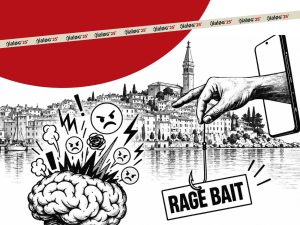
The panel “Rage Bait – Anger as a Shortcut to the Algorithm” explored content designed to provoke strong reactions, the line between legitimate provocation and manipulation, and the responsibility of media outlets, communicators and brands.
We use cookies to advance user experience on our website. Please select cookies you wish to allow us to set on your computer. For more information please see our “Cookies policy” and “Privacy protection”.
Neccessary
Necessary cookies help make our website usable by enabling basic functions like page navigation and access to secure areas of the website. The website cannot function properly without these cookies. These cookies do not store any personally identifiable information.
Performance
Performance cookies help us to understand how you interact with this website by collecting and reporting information anonymously. These cookies allow us to count visits and traffic sources, so we can measure and improve the performance of our site. These cookies do not store any personally identifiable information.