
PR in the Substack Era: Reaching New Audiences
With more than 5 million paid subscriptions, Substack brings together an audience that genuinely reads, trusts, and engages.


Communications professionals do not see AI as a threat, but as a tool worth using – with caution.
Artificial intelligence is becoming increasingly integrated into the everyday work of communications professionals, raising an important question: where does it belong in the creative process? We explored how the profession approaches AI in our September Vox Populi survey.
AI has already become part of the daily work of communications professionals, with more than 90% of our LinkedIn followers who took part in the survey saying they use it. It is most helpful for research and analysis (42%), while idea development and content creation each account for 25%.
This is hardly surprising. AI is particularly effective when it comes to processing large amounts of information quickly – often one of the more time-consuming stages of a communicator’s work. This leaves strategy, tone of voice and the final message in human hands.
When it comes to developing a campaign idea, opinions are divided, but there is one clear point of agreement. None of the respondents would hand over the process to AI without reservation, nor would they do so simply “if necessary”. A slight majority (55%) would be open to collaborating with AI, provided there is human refinement, while 45% believe the creative idea should remain entirely the product of human thinking.
The most interesting response came when we asked what would ultimately influence the decision to hand over part of the creative process to AI. As many as 65% cited a lack of time. A lack of ideas and a lack of budget were each selected by 6%, while 24% would not hand over creative work to AI at all.
In other words, among those open to using AI in the creative process, time pressure – rather than a lack of ideas or budget – is the main driver. In this context, AI is seen as a helping hand when time is tight, rather than a replacement for talent.
The results suggest that the communications profession does not see AI as a threat, but as a tool worth using – with caution. The biggest challenge is not the technology itself, but consistency and responsibility: knowing what to delegate and what to keep in human hands.
The future of communications is therefore unlikely to be a question of “AI or human”, but rather of people who know when and how to use AI. The qualities machines cannot replace – understanding context, managing relationships with different stakeholders, having a feel for the audience and taking responsibility for the message – are becoming even more important competencies for communications professionals in today’s environment.

And be always updated with news from Dialog.
With more than 5 million paid subscriptions, Substack brings together an audience that genuinely reads, trusts, and engages.
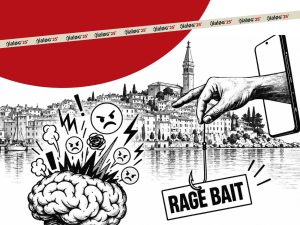
The panel “Rage Bait – Anger as a Shortcut to the Algorithm” explored content designed to provoke strong reactions, the line between legitimate provocation and manipulation, and the responsibility of media outlets, communicators and brands.
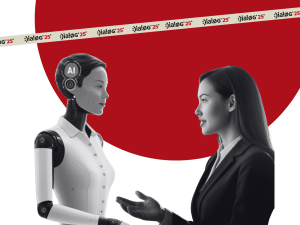
Communications professionals do not see AI as a threat, but as a tool worth using - with caution.