
Who owns content on social media?
Social media and artificial intelligence have democratized creativity, but they have also brought the issue of copyright back into focus.


In a world where everyone is competing to see who can say more and louder – Khaby Lame won with silence.
In a world where everyone competes to say more and louder, Khaby Lame won through silence. One of the most followed TikTok creators has made a significant business move. That move will undoubtedly be remembered in the history of the creator economy. His company, Step Distinctive Limited, has been sold to Rich Sparkle Holdings in a deal worth nearly one billion dollars.
Lame is no longer just an influencer. He built his career on a simple, universally understandable concept—content without a single spoken word. This simplicity allowed him to achieve global relevance without depending on language, market, or culture. Today, Lame brings together more than 360 million followers across social media. He collaborates with global brands such as Hugo Boss and LEGO. According to Forbes, in 2025, he was the tenth highest-paid content creator in the world.
However, his latest move shows that the focus is no longer solely on earnings, but on long-term presence and value within the digital ecosystem. By selling the company, the well-known TikToker is not stepping away from it. Instead, he becomes the controlling shareholder of Rich Sparkle Holdings, thereby retaining influence over the development of his brand and its strategic direction.
This example raises several important questions for brands and communication teams. Personal brands are transitioning from the stage of recognition to the stage of institutionalization. Reputation is no longer a byproduct of visibility. It is becoming the foundation for scaling. In today’s digital ecosystem, communication is tied to business models, not just narratives.
For the communications industry, this means the advisory role is evolving. It is no longer enough to manage messages alone. The focus must shift toward shaping business structures that sustain long-term value. Particular attention should be paid to audience trust. When built consistently, trust can be transformed into a stable business framework.
Lame’s example proves that the market is maturing. The creator economy is entering a phase where emotion and authenticity remain essential, but are reinforced by structures that enable longevity. The future lies not in short-term attention capture, but in the strategic alignment of communication, reputation, and business objectives. Through his business approach, Lame demonstrates the importance of understanding the audience, clearly defining the message, and stepping beyond dominant frameworks

And be always updated with news from Dialog.
Social media and artificial intelligence have democratized creativity, but they have also brought the issue of copyright back into focus.
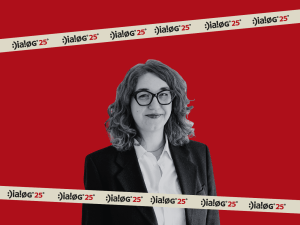
Dialog communications team welcomes Ines Madunić, Senior PR Executive.
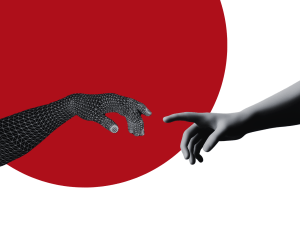
Regardless of the quality of AI content, credibility remains the biggest challenge.