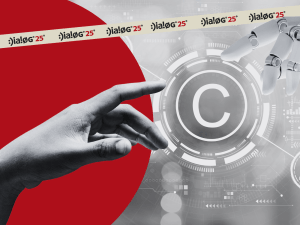
Who owns content on social media?
Social media and artificial intelligence have democratized creativity, but they have also brought the issue of copyright back into focus.


In 2026, value will lie in content that is personal and distinctive – something AI cannot produce.
If 2024 was the year of “more content,” and 2025 the year of artificial intelligence, then 2026 is increasingly emerging as the year in which the focus returns to how content is actually consumed and what truly stays with audiences. Social media is entering a phase where the volume of content published is no longer the key factor; instead, what matters is where, how, and in what context that content reaches users. The changes we are seeing today are neither sudden nor revolutionary, but they have very concrete implications for brands and content creators.
Below is an overview of the trends that will shape social media communication in 2026, based on changes in user behavior that we are already observing and on the development of the platforms themselves.
Although social media is often associated with short and fast formats, longer content formats still hold an important place in user habits. YouTube has been one of the most popular platforms for years precisely because of video content that allows for deeper exploration of topics, continuous following of creators, and content consumption over a longer time frame.
At the same time, formats such as TikTok videos and YouTube Shorts offer shorter videos that serve as a quick entry point into content, a topic overview, or a way to attract new audiences. However, these formats are increasingly functioning as a complement rather than a replacement for longer content. Podcasts, longer video formats, and series are becoming dominant among users who seek context, explanations, and continuity. This is precisely why, in 2026, the importance of strategic channel and format selection is growing – not based on trends, but on communication goals and audience habits.
In other words, attention has not diminished, but has been distributed across more places, which calls for a smarter approach to content and, at times, adapting the same content for different platforms. In practice, this means even more thoughtful decisions about which platforms allow content room to develop, how to use short and long formats in communication, and accepting that it is not necessary to be present everywhere, but rather where the content truly makes sense.
In both 2025 and 2026, artificial intelligence is increasingly being used in the content creation process, but its role is not to replace authors, but to take on an editorial and organizational function. In other words, AI helps with structure, speed, and consistency, while direction, tone, and message remain our responsibility. Creators and brands will increasingly rely on AI for initial concepts, topic development and organization, adapting content to different formats, checking clarity and message structure, and speeding up production.
At the same time, the volume of AI-generated content is growing, making audiences increasingly sensitive to generic content and repetition. This is precisely why, in 2026, value will once again lie in content that has a clear standpoint, a personal character, a recognizable voice, and context – something artificial intelligence cannot produce on its own.
The brands and creators who stand out will be those who use AI as a tool for better content preparation, not for creating the content itself. In an environment where content is easy to produce, differentiation is created by what is chosen to be published and why.
Social media is a space of high visibility, but also high sensitivity. Users are increasingly open in expressing dissatisfaction, criticism, and negative attitudes, and content, whether from brands, influencers, or creators – more often becomes a trigger for discussions that quickly spread beyond the original context. Negative comments, complaints, or public call-outs are no longer isolated incidents, but can easily turn into broader conversations that affect the perception of a brand or individual. Influencers are particularly exposed, as they are expected to be authentic while simultaneously bearing responsibility for the messages they send and the reactions they provoke.
As a result, in 2026, speed of response becomes just as important as the content itself. However, speed without thoughtfulness can have the opposite effect. Responses must be timely, but also carefully crafted, with a clear understanding of the broader context and potential consequences. For creators and brands, this means that content more than ever needs to be clear, contextual, and above all well-researched and accurate. Artificial intelligence can assist with speed and organization, but human judgment, responsibility, and empathy remain crucial. In practice, this also implies readiness for criticism, defined response protocols, and an awareness that trust on social media is built slowly and lost very quickly.
Social media remains the space where social, political, and value-based topics are opened most quickly and commented on most intensely. In such an environment, any message that touches on sensitive topics very quickly ceases to be mere communication and becomes a stance. In 2026, brands and creators will be under even greater public spotlight, not only for what they say, but for whether they stand behind it in the long term. Campaigns that address social issues, sustainability, or other sensitive topics can no longer function as one-off initiatives. Audiences quickly recognize inconsistency between messaging and actual behavior.
That is why such communications must be thoroughly prepared. This includes clearly defined messages, an understanding of possible reactions, and pre-developed crisis scenarios. Social media is not just a channel for launching a message, but also the first line of defense in the event of negative reactions.
In practice, this means that brands must have a clear reason for engaging with a particular topic, internal alignment between messaging and practice, a dedicated team, and defined procedures for monitoring and responding to reactions in real time. Looking ahead to 2026, authenticity will not be measured by intention, but by the willingness to defend, explain, and, if necessary, adjust a message. In an environment of high visibility, trust is built through consistency, and lost just as quickly.

And be always updated with news from Dialog.
Social media and artificial intelligence have democratized creativity, but they have also brought the issue of copyright back into focus.

Dialog communications team welcomes Ines Madunić, Senior PR Executive.

Regardless of the quality of AI content, credibility remains the biggest challenge.