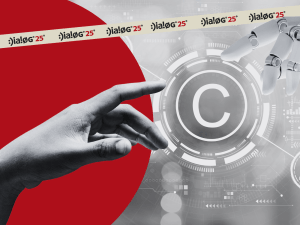
Who owns content on social media?
Social media and artificial intelligence have democratized creativity, but they have also brought the issue of copyright back into focus.


Working from different locations during the summer months is increasingly proving to be a sustainable and effective model – with clear benefits for most respondents.
As the temperature rises, so does the need for greater flexibility, including how and where we work. In our latest Vox Populi survey, we asked our community how they experience remote work during the summer. The results show that a flexible summer work model is no longer seen as a perk – it’s becoming the norm. With more freedom of location, both trust and productivity tend to grow.
67% of respondents have the option to work from home during the summer, and 63% of them plan to do so for an extended period – mostly longer than a week. The key question is no longer can they work remotely, but how long can it last.
The biggest benefit? Improved focus and better health. 92% of respondents say flexibility has a positive impact on productivity, and 96% say it supports their mental and physical wellbeing. Every single respondent agrees that flexible work helps improve their work-life balance. Interestingly, most people (68%) report working the same amount as usual – and 14% even more – breaking the stereotype of “slacking off” when working remotely.
Flexible work models are no longer seen as a bonus – 88% of respondents now expect them from their employer. Moreover, 71% say the ability to work from various locations increases their loyalty to the company. Still, 59% believe that this way of working requires a higher level of mutual trust.
What about team dynamics? A solid 73% say that flexible work positively affects collaboration within teams. This shows that distance isn’t a barrier when communication and organization are well structured.
In short – working remotely is no longer an experiment. It’s a proven model. Employers who recognize this aren’t just enabling flexibility – they’re building stronger, more engaged, and more loyal teams.

And be always updated with news from Dialog.
Social media and artificial intelligence have democratized creativity, but they have also brought the issue of copyright back into focus.
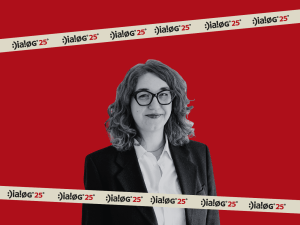
Dialog communications team welcomes Ines Madunić, Senior PR Executive.
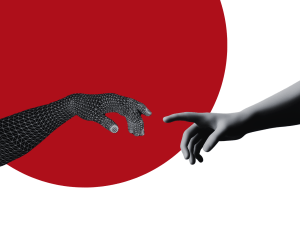
Regardless of the quality of AI content, credibility remains the biggest challenge.