
Gen Z in Shopping – Everything You Thought You Knew
Generation Z doesn't buy products, they buy experiences, values, identity, and trust.


We explore which AI trends will have the greatest impact on the work of communication professionals in 2026.
While 2025 was, in many respects, a year of learning and discovering the potential of generative AI, the pace at which this technology is evolving is matched only by the speed at which it is transforming how we search for information and create content. From making writing, translation and the summarisation of extensive texts or online meeting conclusions easier, to generating audio and visual content, it has become clear just how strongly GenAI influences not only how we use technology, but also how others use it and how information is accessed and consumed.
Traditional SEO (Search Engine Optimization) is increasingly giving way to GEO (Generative Engine Optimization). The goal of generative search optimization is to improve brand visibility within the answers that artificial intelligence generates in response to user queries. As a result, earned content has become even more important in building and strengthening reputation, since GenAI bases its answers on data, articles, interviews and expert statements already published by relevant media outlets.
Compelling stories, audience-relevant content, strategic media partnerships, exclusive data and an “inside perspective” are just some of the professional tools communication experts work with on a daily basis, and the demand for these will only grow.
A key part of the learning curve will also be understanding how a brand or industry is represented across major AI platforms. Communication professionals will need to understand how users research and phrase their queries to GenAI, how to identify inaccurate information before it spreads, and how to recognise potential biases in AI-generated outputs.
Closely linked to the rise of generative engine optimization is the growing realization that written content will increasingly be adapted for artificial intelligence. Shorter sentences, clearly defined subheadings, data points, bullet-structured information and quotes – content that is easy to read and comprehend will become even more important, effectively taking us back to the foundational principles of preparing materials for newsrooms.
Content supported by market research data, trend analyses, expert insights and relevant case studies will not only offer newsworthy information but also provide a credible narrative that fosters reader trust. At a time when fewer journalists in an increasingly saturated information environment are receiving ever more content written entirely, or at least partially, with the help of AI, it becomes clear that, with sustained investment in strong media relationships, this approach will be even more effective in 2026.
It remains to be seen whether the continued development of generative AI will be matched by greater client investment in earned content and in strengthening internal, newsroom-like capabilities, either in-house or with the support of PR agencies, where the focus will be on editorial-quality content and transforming meaningful insights into compelling stories.
In the general inflation of messages and content that we face as consumers across multiple communication channels, we continue to return to the basic assumptions behind successful storytelling. Authenticity, relevance and originality are concepts we already know well, and proven recipes for success. And yet, despite the abundance of communication channels and AI tools that can make storytelling more efficient, truly authentic voices seem increasingly rare or harder to break through.
However, precisely because there is a growing volume of content that feels as though it was written by GenAI, polished yet generic pieces created according to the same formula, alongside AI-generated images and videos, audiences are craving real people and real stories.
Real faces and genuine emotions will make an even greater difference, as will consistency and transparency in messaging. In 2026, we can therefore expect to see more original video series for social media and podcasts that place these elements firmly at the centre.

And be always updated with news from Dialog.
Generation Z doesn't buy products, they buy experiences, values, identity, and trust.

The Public Relations and Communications Association (PRCA) has introduced a new definition of public relations, emphasising the role of modern PR professionals as strategic advisors.
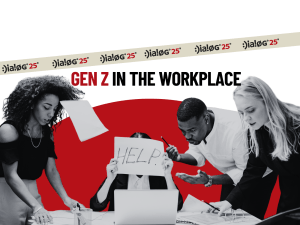
Gen Z is already reshaping business culture, and the organizations that fail to adapt to their priorities and communication style are at risk of losing the youngest talents.