In the early 2010s, Allbirds, together with brands such as the cosmetics company Glossier, eyewear brand Warby Parker, and Dollar Shave Club, achieved remarkable success by focusing on a single generation — millennials — and tailoring their entire business models to them.
These companies fully embraced the internet and social media, building strong businesses through direct-to-consumer online sales. At their peak, the value of these brands reached billions of dollars. But time was not on their side. Since peaking in November 2021, shortly after going public, Allbirds has lost 99% of its market value. And it is not alone. Brands that flourished during the 2010s thanks to the enthusiasm of younger consumers have faced steep declines in recent years.
Two Foundations of Rapid Growth
These once hugely popular brands were guided by two core ideas.
The first was that many products traditionally believed to require in-person inspection before purchase could actually be sold successfully online. This eliminated the costs associated with physical stores. Warby Parker mailed eyeglass frames to customers for home try-ons, while Casper concluded that shoppers did not need to test a mattress in-store before buying it.
The second idea was that skillful use of social media could generate interest without expensive advertising campaigns. Glossier, for example, encouraged customers to share unboxing content through its colorful packaging, thereby gaining organic visibility.
How the Advantage Melted Away
At first, this model enabled rapid growth. Over time, however, it became clear that the real challenge was long-term sustainability. Favorable conditions such as low interest rates and inexpensive customer acquisition through social media significantly contributed to early-stage growth.
Today, those conditions no longer apply. Rising interest rates have made financing more difficult, while investor attention has shifted toward artificial intelligence. At the same time, digital advertising has become saturated, and customer acquisition costs have risen sharply. In response, many brands have opened physical stores in recent years after all.
Competition in the market has also intensified considerably. Large, established players improved their digital channels by learning directly from the millennial-favorite brands. A new generation of influencer-led and celebrity-backed brands has also emerged, using the same growth tools from the very beginning.
A Strategy of Adaptation
Allbirds, the brand mentioned at the start of the story, may be the most extreme example because it is completely changing its business direction. But other companies have also gone through various stages of development and their own crises, from delistings to attempted sales.
The era of rapid growth for millennial brands has clearly come to an end, and what comes next requires a different focus.
The goal is no longer simply to attract customers, but to retain them. In an environment where distribution channels are accessible to everyone, long-term differentiation depends less on visibility itself and increasingly on trust, consistency, and brand reputation.
The story of Allbirds and similar brands shows that rapid growth in the digital age does not guarantee long-term sustainability if companies fail to adapt to market cycles.
Subscribe to our Newsletter!
And be always updated with news from Dialog.
Highlights
Influencer Vetting: Why the Right Influencer Matters More Than Follower Count
A successful influencer marketing campaign starts long before the first social media post goes live. It starts with choosing the right creator - someone whose audience, values and communication style align with the brand.
With more than 5 million paid subscriptions, Substack brings writers together around highly specific interests and topics, creating small but highly focused communities that may be worth getting to know.
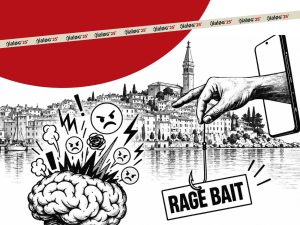
Rage Bait: Key Takeaways from the Weekend Media Festival
The panel “Rage Bait – Anger as a Shortcut to the Algorithm” explored content designed to provoke strong reactions, the line between legitimate provocation and manipulation, and the responsibility of media outlets, communicators and brands.
We use cookies to advance user experience on our website. Please select cookies you wish to allow us to set on your computer. For more information please see our “Cookies policy” and “Privacy protection”.
Neccessary
Necessary cookies help make our website usable by enabling basic functions like page navigation and access to secure areas of the website. The website cannot function properly without these cookies. These cookies do not store any personally identifiable information.
Performance
Performance cookies help us to understand how you interact with this website by collecting and reporting information anonymously. These cookies allow us to count visits and traffic sources, so we can measure and improve the performance of our site. These cookies do not store any personally identifiable information.