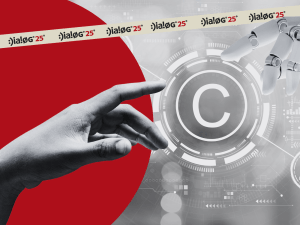
Who owns content on social media?
Social media and artificial intelligence have democratized creativity, but they have also brought the issue of copyright back into focus.


Social media and artificial intelligence have democratized creativity, but they have also brought the issue of copyright back into focus.
In the past, copyright was reserved for publishing houses and film studios. Today, battles are fought over a 15-second TikTok choreography or a visual generated by AI. It has never been easier to record a video, design a visual, or write a piece of text that reaches millions. At the same time, it has never been easier to “borrow” someone else’s work, idea, or identity.
Legally speaking, things are quite clear. Copyright belongs to the person who created the work and gives them the exclusive right to decide how it will be used, reproduced, and adapted. However, practice on social media follows its own rules.
On platforms like Instagram and TikTok, content lives through sharing. Features such as Repost, Duet, or Stitch are designed to encourage duplication. At the same time, algorithms often don’t reward originality, but rather engagement.
We remember the case of Jalaiah Harmon, a young dancer who created the globally popular “Renegade” dance. While top TikTok stars like Charli D’Amelio were gaining millions of views and sponsorship deals performing her choreography, Jalaiah remained completely unknown for months.
With the rise of artificial intelligence, the line between inspiration and theft has become even more blurred. AI tools generate text, images, and video content in seconds, but based on human works on which these models were trained.
According to current interpretations within the EU, copyright can belong only to a natural person. This means that content generated entirely by AI does not have traditional copyright protection.
However, even when there is no “visible” author, traces of someone else’s creativity are often still present. The law protects a specific work, but not the idea itself, and in the digital age, ideas have effectively become a “public good.”
Technically, the owner is the author. In practice, the owner is the one who first monetizes the algorithm’s attention. But in the long run, the owner is the one who builds an unbreakable relationship with their audience.
The new definition of ownership is no longer in the work itself, but in the authentic perspective that no algorithm, not even AI, can fully replicate.

And be always updated with news from Dialog.
Social media and artificial intelligence have democratized creativity, but they have also brought the issue of copyright back into focus.
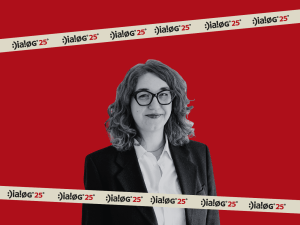
Dialog communications team welcomes Ines Madunić, Senior PR Executive.
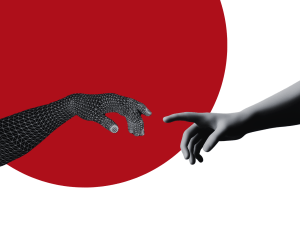
Regardless of the quality of AI content, credibility remains the biggest challenge.