Plastic Free July: Awareness Is Growing, Sustainable Habits Are Becoming Everyday Practice
From good intentions to sustainable habits – what stands between us and real change?
—
3 min to read
Written by:
Ema Aralica Šikonja
Plastic Free July is a global initiative that has been encouraging individuals and organizations for years to reduce single-use plastic consumption. However, how willing are we to change our own habits, and what role do we see employers playing in creating a more sustainable environment? Our July Vox Populi survey explored these questions.
Awareness is growing, but change requires consistency
The majority of survey participants recognize the importance of individual contributions to reducing plastic waste. More than three-quarters believe that individuals can influence the amount of plastic waste through their own actions (82% on Instagram, 86% on LinkedIn). However, there is still a gap between attitudes and actual habits. Only 25% of participants have taken part in Plastic Free July so far, while 36% plan to introduce at least one new sustainable habit during July. The results show that sustainability awareness is present, but the key challenge remains turning good intentions into behaviours that become part of everyday life.
Small changes show the greatest progress
When it comes to specific habits, it is clear that certain sustainable choices have already become part of everyday life. More than half of our social media followers who participated in the survey use a reusable bottle when they are away from home. More than 80% use reusable bags when shopping, both on Instagram and LinkedIn. A positive shift is also visible in waste separation habits. A total of 69% of respondents separate plastic from other types of waste, showing an increase compared to last year’s 62%.
However, single-use plastic remains a challenge. While simpler sustainable habits are adopted more quickly, reducing overall plastic consumption requires deeper changes in everyday behaviour. The fact that 58% of survey participants still rely on single-use plastic shows that the transition from awareness to real change is still underway.
Sustainability is becoming part of organizational identity
The results show that employees increasingly recognize the role organizations can play in encouraging more sustainable habits. A total of 57% of respondents believe that employers can encourage employees to adopt more sustainable practices, while a further 22% believe this is possible to some extent.
At the same time, 82% of participants say their organization implements some form of sustainable business practices, and 55% note that their employer organizes sustainability-related education. Sustainability is therefore becoming one of the elements shaping how organizations are perceived as desirable employers. More than half of respondents (56%) believe it can play an important role in attracting and retaining talent.
Today, employees do not expect organizations to simply communicate their values – they expect them to demonstrate those values through concrete activities and practices visible in everyday operations.
To learn more about how we put these principles into practice at Dialog, read our article Why Green Offices Matter.
From awareness to real change
The results of the research show that sustainability is becoming increasingly present in the decisions made by individuals and organizations. However, the greatest challenge remains consistency – turning awareness and good intentions into concrete behaviours.
That is why Plastic Free July is not only a reminder of the importance of reducing plastic use, but also an opportunity to make sustainability part of everyday life. Real change is not built through big promises, but through consistent actions – in our personal lives as well as within organizations.
Subscribe to our Newsletter!
And be always updated with news from Dialog.
Highlights
Influencer Vetting: Why the Right Influencer Matters More Than Follower Count
A successful influencer marketing campaign starts long before the first social media post goes live. It starts with choosing the right creator - someone whose audience, values and communication style align with the brand.
With more than 5 million paid subscriptions, Substack brings writers together around highly specific interests and topics, creating small but highly focused communities that may be worth getting to know.
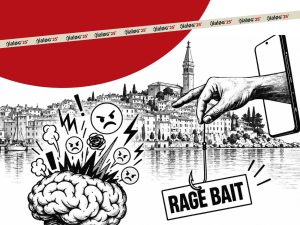
Rage Bait: Key Takeaways from the Weekend Media Festival
The panel “Rage Bait – Anger as a Shortcut to the Algorithm” explored content designed to provoke strong reactions, the line between legitimate provocation and manipulation, and the responsibility of media outlets, communicators and brands.
We use cookies to advance user experience on our website. Please select cookies you wish to allow us to set on your computer. For more information please see our “Cookies policy” and “Privacy protection”.
Neccessary
Necessary cookies help make our website usable by enabling basic functions like page navigation and access to secure areas of the website. The website cannot function properly without these cookies. These cookies do not store any personally identifiable information.
Performance
Performance cookies help us to understand how you interact with this website by collecting and reporting information anonymously. These cookies allow us to count visits and traffic sources, so we can measure and improve the performance of our site. These cookies do not store any personally identifiable information.